Short answer
Get appropriate medical attention, identify the dog and owner if it can be done safely, report the event to the appropriate local authority when required or advised, photograph injuries and the location, preserve damaged clothing, and save witness and insurance information. Do not put yourself at risk trying to approach or restrain the animal.
Do not postpone care while trying to settle blame
Follow the medical guidance you receive about wound care, infection, vaccination, and follow-up. Record the dog's description, name if known, owner or handler, location, and any vaccination information provided. Keep the report number and agency contact if animal control or police respond.
Do not delay care while trying to solve responsibility. Health questions belong with qualified medical and public-health professionals.
Help after an injury
Ask Jason Hicks about your next step.
When you are hurt, bills and insurance questions can be difficult to deal with on top of everything else. Ask for a conversation about the concern that brought you here.
Jason Hicks is an Oklahoma attorney, practicing since 2008.
Jason Hicks personally reads every message sent through 405. If more information is needed, Jason Hicks follows up himself.
When the owner's statement and paperwork do not match
An owner's message and a vaccination record are not the same information. Tell the treating clinician or public-health contact exactly what you received: an owner's assurance, a document, or no information you can connect to the dog. OSDH says vaccination history must be verified through an official record or the veterinarian.
Keep the message and any document as received, noting who provided each and when. Point out anything you cannot read or connect to the dog involved, including an unclear date or source. If the dog or owner cannot be identified, say that rather than guessing. Ask the treating professional or appropriate agency how to provide the information without approaching or restraining the animal yourself.
Fictional example: The owner texts that the dog is vaccinated and sends a picture showing only part of a document. You cannot tell whether it concerns the dog that bit you, and its date and source are unclear. Tell the clinician or agency that you have an owner statement and an incomplete document, not a vaccination status you have confirmed. The question is what information needs clarification, not whether you should label the dog vaccinated or unvaccinated.
Who needs to know what?
For medical questions, contact your healthcare provider. OSDH identifies local animal control or the sheriff as contacts for assistance with the animal. It directs bite reports to the county health department's sanitarian, the public-health contact who can help confirm the animal's condition and rabies vaccination status.
For a bite within Oklahoma City limits, the City's Animal Welfare page directs reports to (405) 297-2255. It asks when and where the bite happened, including the date and time, details identifying the injured person, and where they were bitten. Give those details to the agency, not through this law firm's initial website inquiry.
For a bite outside Oklahoma City limits, confirm the agency for the place where it happened rather than assuming OKC will handle it. OSDH's County Health Departments listing can help you find a public-health contact; ask which office handles animal-bite reports for that location.
An insurer's request is a separate document to discuss with a lawyer. Keep the actual request and ask Jason what it asks you to confirm or agree to, particularly if it treats the dog's identity or vaccination information as settled when it is not clear to you. An agency's health guidance is not a substitute for reviewing an insurance statement or release.
Record the setting without turning it into a confrontation
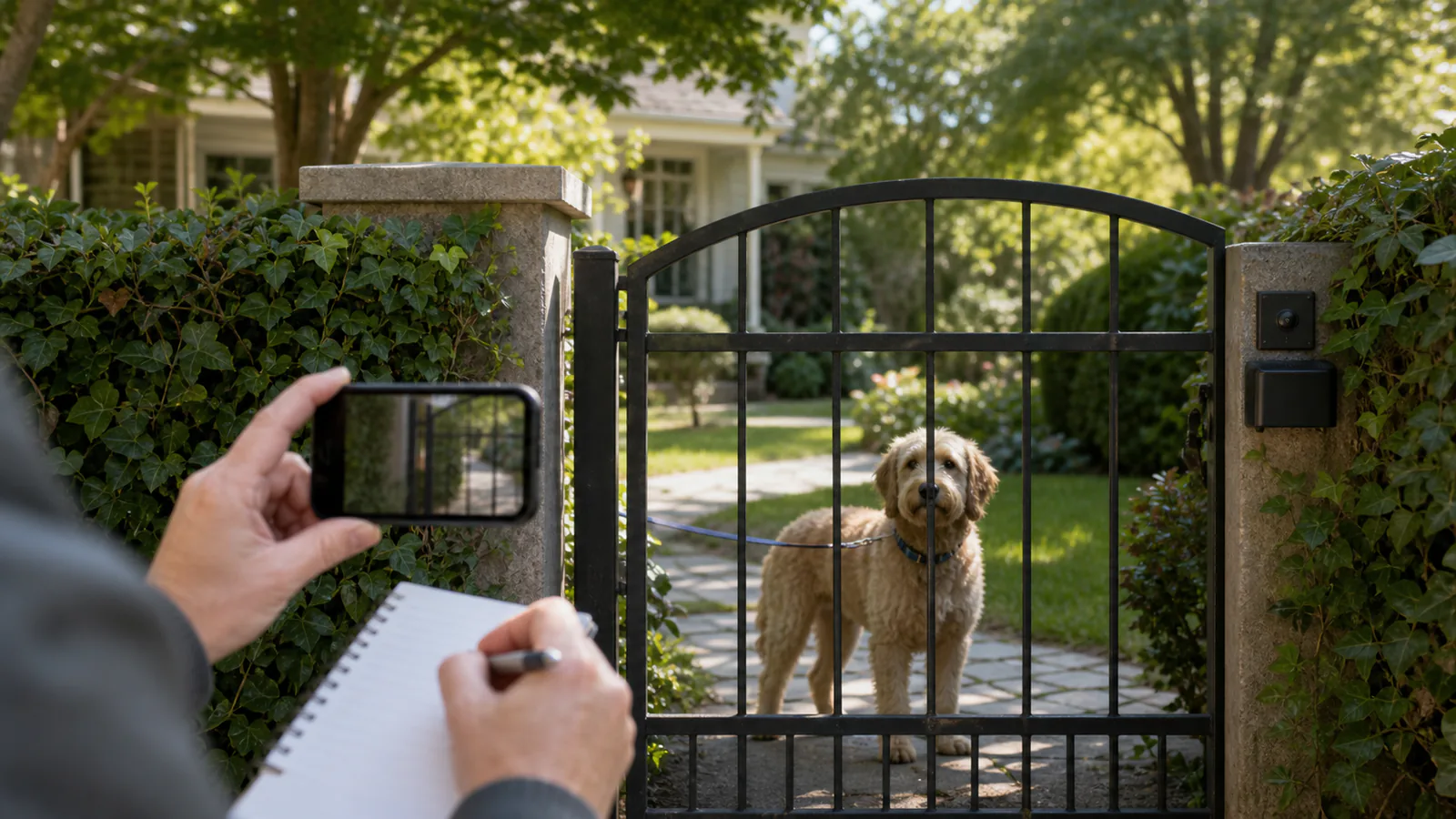
Photograph the location, fence, gate, leash, signs, doorway, shared area, or other physical details when safe and permitted. Write down how the interaction began, where each person and animal moved, and what was said immediately before and after.
If the owner is a neighbor, friend, relative, customer, or landlord, keep the conversation factual. Insurance and responsibility questions can be addressed without accusations or threats.
- Animal and owner or handler identification
- Agency report and vaccination information
- Injury and location photographs
- Witness contacts and contemporaneous messages
- Clothing, medical and expense records
Ask who controlled the dog and the place
The useful questions may include who owned or kept the dog, who controlled the location, whether a leash or enclosure was used, whether a business or landlord was involved, and what official or insurance records exist. Prior-event questions require reliable records, not neighborhood rumor.
Preserve social messages or communications that relate directly to the event, but do not conduct a public campaign about the owner or animal. Public posts can spread incomplete information and make resolution harder.
Keep recovery separate from the insurance conversation
Save medical records, bills, medication receipts, work notes, transportation costs, and photographs over time. Keep insurer communications and policy questions in a separate folder. If a payment or release is offered, review the document itself before signing.
If the owner cannot be identified, a landlord or business may be involved, or a release arrives before recovery is clear, ask Jason what needs attention. No first conversation can promise that an owner, property operator, or insurer is responsible before the facts are understood.
What to gather
- Dog and owner or handler identification
- Animal-control, police or public-health report information
- Vaccination documents or statements received, with their source and date
- Requests for missing vaccination information and any response
- Injury, clothing and location photographs
- Witness and direct communication records
- Medical, work, expense and insurance materials
Questions that may change the answer
- Can the dog and owner or handler be reliably identified?
- Was an official report made, and is vaccination information available?
- Which records have you received, and who supplied each one and when?
- Which identified records are still missing, and which details remain unverified?
- Which health questions need a clinician or public-health professional?
- Who controlled the dog and location?
- Which health, work, expense and coverage records are preserved?
Common questions
Should I contact animal control?
Local reporting and public-health practices can vary. If an agency or medical provider advises a report, preserve the agency name and report number. The Oklahoma City animal-control source listed in this guide covers incidents within city limits; confirm the appropriate local agency for an incident elsewhere. Do not approach an unsafe animal yourself.
What if I know the dog's owner?
A personal relationship does not replace medical care or a factual record. Keep communication calm, preserve information, and avoid signing anything you do not understand.
What if the injury came from being knocked down rather than bitten?
Document the movement, location, animal, handler, witnesses, and injuries. A lawyer can address what actually happened without forcing the event into a bite-only label.
Why you can check the answer
See the law and official information behind this page.
These references support the general law, official process, or practical advice described here. They cannot decide how a rule, policy, document, or deadline applies to your particular facts.
- 405 editorial method
405 Injury Law neutral record-organization methodology (internal; not legal authority)
405’s internal method for organizing records, separating observations from inferences, and identifying the next question. It is not legal, medical, or insurance authority.
- Oklahoma law
Oklahoma Statutes Title 4, Sections 42.1 through 42.3 (official external source)
Current Oklahoma statutes used only to support the guide's cautious identification of owner, lawful-location, provocation, and injury questions.
Pinpoint: Title 4, Sections 42.1 through 42.3, PDF pages 20-21
- Official source
Animal Bite: Cat, Dog, Ferret Bite to a Human (official external source)
Official public-health guidance used to keep care first, preserve the source and date of vaccination information actually received, and route unresolved health questions to qualified professionals.
Pinpoint: Important steps after an animal bite and the animal-available section, including healthcare-provider, animal-control or sheriff, vaccination or owner information, and county-health sanitarian channels.
View 3 additional supporting sources
- Official source
Oklahoma City Animal Control (official external source)
Official local page used only for the Oklahoma City reporting channel and requested factual information; it does not determine health, vaccination validity, ownership, provocation, liability, or damages.
Pinpoint: Animal Bites section: City-of-OKC geographic limit, reporting channel, and requested date, time, location, victim, and wound facts.
- Source
OSDH Animal Rabies Vaccine Frequently Asked Questions (official external source)
OSDH identifies the official record or veterinarian as the basis for recognizing vaccination history. This does not establish the status of any dog or document.
Pinpoint: PDF page 2, record-retention question, extracted lines45–47
- Source
OSDH County Health Departments (official external source)
An official starting point for locating county public-health contacts. Ask the office which contact handles the incident location.
Pinpoint: County controls, County Health Departments heading and alphabetical contacts link, extracted lines6–13/22–30
See how 405 checks important legal and official information.