Short answer
Put safety first. Then exchange and record essential information, document the scene only when it is safe, and keep reports, photographs, messages, bills, towing records, and repair records together. If you cannot collect something safely, note what is missing and return to it through official records or later follow-up.
Prefer paper or a saved PDF? This page is formatted for printing without requiring an email address.
Still unsure what the details mean?
Tell Jason Hicks what happened and what feels unresolved.
You can change the subject before sending. A first message does not mean the matter has been accepted or create an attorney-client relationship.
Jason Hicks is an Oklahoma attorney, practicing since 2008.
Jason Hicks personally reads every message sent through 405. If more information is needed, Jason Hicks follows up himself.
The photograph can wait. Safety cannot.
Check for immediate danger and seek appropriate emergency help. Move away from traffic or another hazard when you can do so safely. Do not enter a travel lane, confront another person, or delay emergency assistance to collect a photograph, name, or document.
If you cannot complete the rest of this guide at the scene, that is okay. Record what you remember after you are in a safe place. A short, honest gap in the record is better than taking a risk or filling the gap with a guess.
Record the people, vehicles, and official response
When it is safe and practical, collect the names and contact details offered by the people involved, vehicle descriptions and license plates, available insurance information, and witness contacts. Note the investigating agency and any report or incident number you receive.
Oklahoma law treats exchanging information, giving immediate notice to law enforcement in qualifying crashes, any separate driver-filed report, and requesting an agency record later as different tasks. Do not assume that completing one completes the others. The duties that apply depend on the event and current law, so preserve what was provided and use current official instructions.
- People and contact details
- Vehicle descriptions, plates, and available insurance information
- Witness names and a safe way to reach them
- Investigating agency and report reference
- Towing company and vehicle destination
One crash can create four different kinds of “report”
At the scene, the information-exchange task concerns the people and vehicles involved. A qualifying injury or death can raise a separate immediate-notice question for law enforcement. Oklahoma law also contains a driver-report provision with its own conditions, while a later request for the investigating agency's crash record is simply a way to obtain an existing record.
Write down which task actually occurred, who handled it, and any confirmation or reference number. If you are unsure whether a duty still applies, use current official instructions or individual legal review rather than treating an insurance claim, tow ticket, or later records request as a substitute.
A dent shows damage. The wider scene shows how it happened.
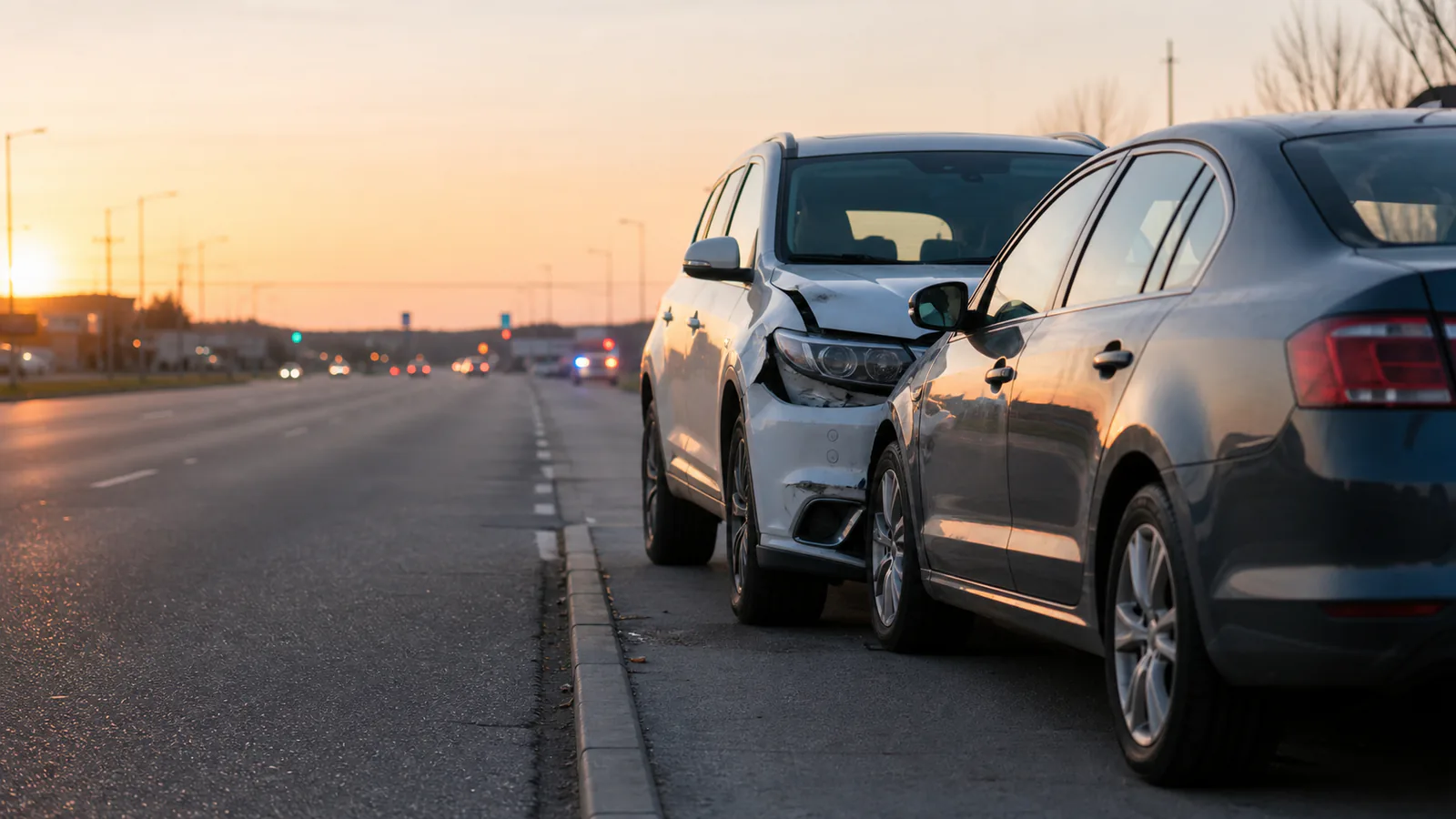
If conditions allow, photograph the vehicles, visible damage, overall scene, travel directions, lane markings, signs, signals, roadway surface, lighting, and weather. Capture both close views and wider views that show where details fit together.
Treat photographs as observations, not a fault decision. Do not stage positions or ask anyone to recreate the event. Label later photographs with the date and explain when conditions differ from the crash scene.
Give the next few weeks one place to land
Create simple folders for scene and report materials, insurance communications, health and billing records, and vehicle or transportation records. Save original files when possible and give copied photographs or notes clear dates.
Write a brief timeline in your own words while details are fresh. Separate what you personally saw or heard from what someone later told you. Add claim numbers, contact names, and each request or response as they arrive.
- Scene photographs and a factual timeline
- Report request and received report
- Claim numbers, letters, emails, and call notes
- Bills, explanations, receipts, and work records
- Towing, storage, repair, valuation, and transportation records
Let the next calls fill gaps instead of creating new ones
After the scene, confirm where the vehicle went, how to request the official report, which claim numbers have been opened, and what documents each sender wants. Ask for important coverage, payment, or scheduling information in writing when practical.
Health decisions belong with qualified medical professionals, not a website checklist. Keep the resulting records, but do not paste medical histories, identification numbers, financial information, or sensitive documents into an initial website message.
Why you can check the answer
See the law and official information behind this page.
These references support the general law, official process, or practical advice described here. They cannot decide how a rule, policy, document, or deadline applies to your particular facts.
Written and reviewed by Jason Hicks.
Reviewed . Next review due .
- 405 editorial method
405 Injury Law neutral record-organization methodology (internal; not legal authority)
405’s internal method for organizing records, separating observations from inferences, and identifying the next question. It is not legal, medical, or insurance authority.
- Oklahoma law
Oklahoma Statutes Title 47, crash exchange, notice, and reporting provisions (official external source)
The Oklahoma statutes used to distinguish at-scene exchange, immediate law-enforcement notice, and a separate driver-reporting process from a later request for an agency report. The summary is not a complete statement of duties or exceptions.
Pinpoint: Sections 10-104, 10-107, and 10-108
- Official source
Service Oklahoma forms directory (official external source)
The State of Oklahoma directory used to confirm that collision-report and motor-vehicle record request forms are available.
- Official source
Oklahoma City Police records and permits (official external source)
Oklahoma City’s official police-records page, used to verify the local accident-record request path.
See how 405 checks important legal and official information.
What to gather
- At the scene, if safe: people, vehicles, plates, witnesses, and agency information
- At the scene, if safe: wide and close photographs of vehicles and surroundings
- After leaving: a dated timeline and report request information
- After leaving: claim numbers, insurer correspondence, and a call log
- After leaving: health-billing, towing, repair, storage, and transportation records
Questions that may change the answer
- Is everyone away from immediate traffic or another hazard?
- Which facts did you personally observe, and which came from someone else?
- What information could not be collected safely at the scene?
- Which report, insurance, health-billing, or vehicle task needs the next follow-up?
Common questions
What information has to be exchanged after a crash?
When safe, preserve the names, contact details, vehicle and available insurance information, and official instructions you receive. Oklahoma's exchange, immediate-notice, driver-report, and later record-request questions are distinct, and the applicable duty depends on the facts and current law.
Which photographs are useful if it is safe to take them?
Photograph the vehicles, visible damage, overall scene, travel directions, lane markings, signs or signals, road conditions, and relevant surroundings. Do not enter traffic or recreate the event for a picture.
What if no report was made at the scene?
Record which agencies responded, if any, and preserve the information you have. A later request cannot create a record that was never made, and it does not answer whether a separate notice or driver-report duty applied. Use current official instructions or ask a lawyer about that question.