Short answer
Get emergency and medical help first. When possible, preserve the exact location, travel directions, traffic controls, lighting, clothing, vehicle information, witness contacts, photographs, and nearby camera locations. A pedestrian should not have to prove the entire event from memory alone.
Anchor the story to the exact place
Record the closest address, intersection, driveway, parking-lot aisle, crosswalk, transit stop, or landmark. Note which direction the pedestrian and vehicle were moving and where each came to rest if known. A rough sketch can be useful when it is labeled as a memory aid rather than a precise measurement.
Photograph signals, signs, lane markings, curb ramps, lighting, construction, and blocked sight lines when it can be done safely. Conditions may look different by time of day, weather, season, or later repairs.
Help after an injury
Ask Jason Hicks about your next step.
When you are hurt, bills and insurance questions can be difficult to deal with on top of everything else. Ask for a conversation about the concern that brought you here.
Jason Hicks is an Oklahoma attorney, practicing since 2008.
Jason Hicks personally reads every message sent through 405. If more information is needed, Jason Hicks follows up himself.
Describe the crossing in order, with or without visible markings
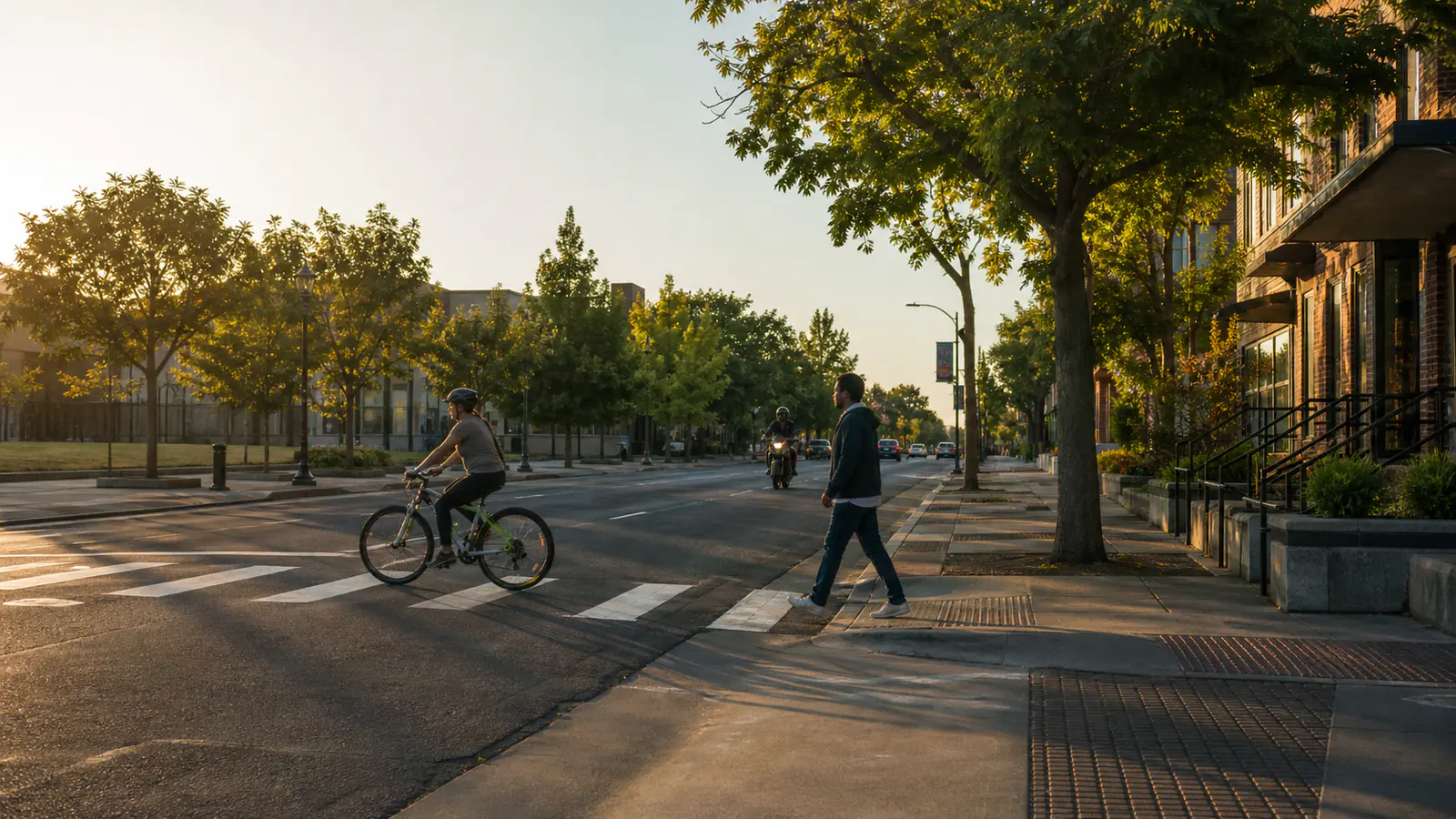
Begin at the place the pedestrian started: a curb, sidewalk, driveway, parking space or transit stop. Write down the path toward the collision and the vehicle's approach. Separate the pedestrian's location before entering the roadway, at contact and afterward; mark any point or time that is estimated.
Note the street and side, nearby intersection, curb corners or ramps, visible crossing lines, signs and signals. If you did not see a marking or signal, say what you observed rather than filling in the missing detail. Label photographs with their date and viewpoint, and keep later changes separate from crash-day observations.
Place each account beside that sequence: who saw what, where they were and when they observed it. Keep what a driver or witness said distinct from what you saw yourself. Note a signal's state only if you observed it or have a record of it, and identify the source. Leave legal questions about the crossing and responsibility for review of the particular location and records.
The clearest witness may be a camera no one has asked about
Nearby businesses, homes, buses, vehicles, intersections, or doorbell systems may have captured part of the event. Write down camera locations even if you do not have the footage. Witness names and contact information are often easier to preserve early than to recover later.
Do not trespass, pressure a witness, or make a dangerous roadside search. From a safe place, note the camera location, approximate event time and area it might show. Ask the property contact who handles recordings, whether a recording covers that place and time, whether it can be kept, and how a request for a copy would be considered. Keeping footage and receiving a copy are separate questions. If the holder is unknown, the request is refused or no answer arrives, keep the location details and actual request or reply for prompt discussion with a lawyer.
- Witness names and contact details
- Nearby camera and business locations
- Traffic signal, sign and crosswalk photographs
- Vehicle and driver information
- Emergency-response and incident-report references
Record how the collision changed the next ordinary day
Pedestrian injuries can change how a person gets to work, school, treatment, caregiving, or ordinary errands. Save receipts for rides, mobility aids, parking, help, or replacement items, and keep work or school notes. Use dates and specific observations; note what you do not remember or cannot confirm.
Medical symptoms and recovery should be discussed with qualified providers. The website does not offer medical advice. The initial form accepts broad choices and safe contact details, not a medical history or uploads; keep detailed medical records for a later appropriate exchange if one is arranged.
Do not let one statement become the whole account
Statements about a crosswalk, signal, clothing, distraction, visibility, or speed should be compared with the physical scene and available records. The honest answer may include uncertainty; it should not turn one person's statement into a conclusion.
If you are helping an injured family member, use the form's broad choices and your own safe contact details to request a conversation. Keep the relationship and best-contact explanation for that conversation if one is arranged; do not place another person's sensitive details in contact fields.
What to gather
- Exact location and travel-direction notes
- Signals, signs, lighting and sight-line photographs
- Witness and nearby camera locations
- Vehicle, driver and incident-report information
- Medical, work, school and transportation records
Questions that may change the answer
- Where exactly did the movement and impact occur?
- What traffic controls and lighting were present?
- Which witnesses or cameras may be independent?
- How have mobility, work, school or transportation changed?
Common questions
What should I note about a collision outside a marked crosswalk?
Write down the exact location, where the pedestrian began, the path across or along the roadway, the vehicle's approach and the observed point of contact. Note nearby intersections, curb corners, crossing lines, signs and signals, even if some details remain unknown. Keep crash-day observations separate from later photographs and from what someone else said. Leave legal questions about the crossing and responsibility for review of the particular location and records.
How can I ask about possible camera footage?
From a safe place, note the camera location and approximate event time. Ask the property contact who handles recordings, whether one exists, whether it can be kept, and how a copy request would be considered. A request proves neither existence nor access. Keep any refusal or silence for prompt discussion with a lawyer; do not trespass or make an unsafe search.
Can a family member send the first request?
Yes. A family member can use the broad choices and their own safe contact details to request a conversation. The form has no relationship or narrative field, so keep that explanation and the injured person's sensitive details for a later appropriate conversation if one is arranged.
Why you can check the answer
See the law and official information behind this page.
These references support the general law, official process, or practical advice described here. They cannot decide how a rule, policy, document, or deadline applies to your particular facts.
By Jason Hicks
- 405 editorial method
405 Injury Law neutral record-organization methodology (internal; not legal authority)
405’s internal method for organizing records, separating observations from inferences, and identifying the next question. It is not legal, medical, or insurance authority.
- Oklahoma law
Oklahoma Statutes Title 47, crash exchange, notice, and reporting provisions (official external source)
The Oklahoma statutes used to distinguish at-scene exchange, immediate law-enforcement notice, and a separate driver-reporting process from a later request for an agency report. The summary is not a complete statement of duties or exceptions.
Pinpoint: Sections 10-104, 10-107, and 10-108
See how 405 checks important legal and official information.