Short answer
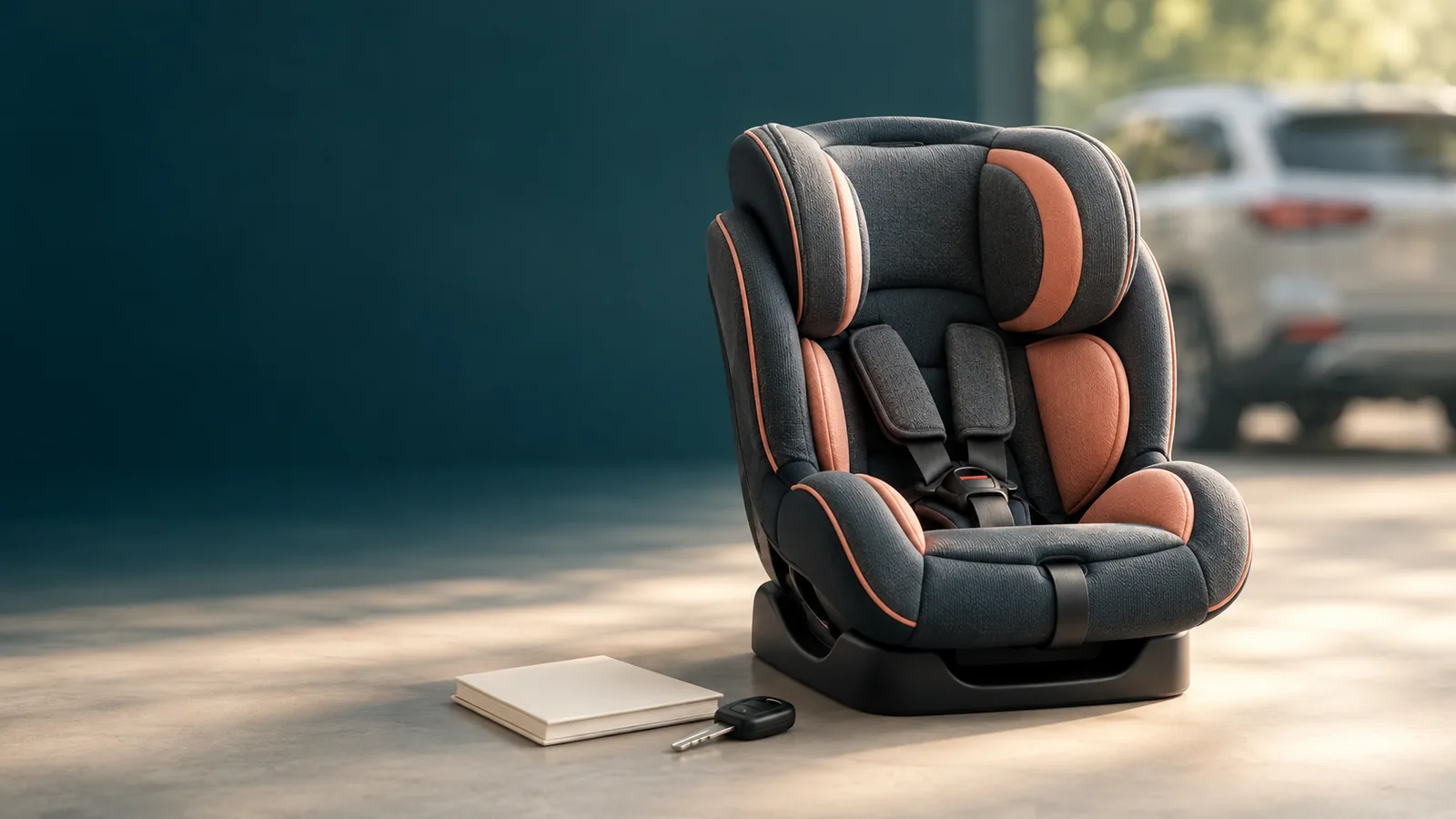
Make the next ride the priority: a suitable seat for your child and the car you will use. Follow the seat manufacturer's crash instructions, not a payment decision. When replacement costs are disputed, the insurer's reason tells you what to address next.
Sort out the next ride—not the whole claim
If your car is in the shop, plan for the rental or relative's vehicle your child will actually ride in. A replacement needs to suit your child's age and size and fit that car. Use the seat instructions alongside the vehicle manual.
For the seat involved in the crash, the model number and manufacture date on its label help you find the correct instructions. Use the matching manufacturer's manual, or contact the manufacturer when its crash-replacement directions are missing or unclear. Instructions for a similar-looking seat are not a substitute.
A certified child passenger safety technician can help you install and use the next seat. NHTSA provides inspection resources; confirm appointment arrangements and any charge before going. This is practical help with the seat and vehicle you will use, rather than leaving you to figure out the installation alone.
A borrowed seat may help with the immediate expense, but its history matters. Missing instructions may be available from the manufacturer; a newly found manual cannot establish an unknown crash history. When that history cannot be established, arrange another suitable seat rather than treating a fitting visit as proof of its past.
Still unsure what the details mean?
Choose the subject and question you want Jason Hicks to review.
Choose the closest subject and question, optionally select a broad timing category, and provide safe contact details. The form does not accept a written account or uploads. A request does not mean the matter has been accepted or create an attorney-client relationship.
Jason Hicks is an Oklahoma attorney, practicing since 2008.
Jason Hicks personally reads every message sent through 405. If more information is needed, Jason Hicks follows up himself.
Does the old seat need to be replaced?
NHTSA recommends replacing seats after moderate or severe crashes and says not to reuse them. Its minor-crash guidance does not automatically require replacement, but all five conditions below must apply.
An unknown answer is not yes. Follow the manufacturer's instructions even if all five appear satisfied; the list is not a reuse certificate.
Fictional example: A parent drives home, but the door beside the seat is damaged. That fails one condition, even if the seat looks fine. Arrange the next ride without treating drivability as clearance.
- The vehicle could be driven away from the crash scene.
- The door closest to the car seat was undamaged.
- No one in the vehicle was injured in the crash.
- If the vehicle had airbags, none deployed.
- The car seat has no visible damage.
You may need the replacement before the insurer agrees
Paying for a new seat while an insurer argues about it is a real strain. You may decide to buy an appropriate replacement or arrange a suitable temporary seat while the payment issue is addressed. A quote gives you a proposed amount to discuss; a receipt records what you spent. Neither by itself establishes coverage or guarantees reimbursement.
If the answer is 'we will not pay,' get the reason in writing. Is the insurer disputing replacement itself, the price, or whether the policy or claim covers the expense? The answer changes what will help. Manufacturer guidance and the crash facts address the need for replacement. An itemized quote helps explain a price. A policy-based refusal needs attention to the actual policy and written position—not simply another photo of the seat.
Work with what you already have. An old receipt or retailer order can help identify the original purchase; model information can help when that record is missing. Do not invent a purchase price. Already available seat and vehicle photos can help explain the equipment and crash facts being discussed. Keep those together with the replacement quote or receipt and the insurer's actual reply.
When a lawyer can help move the disagreement forward
Legal help becomes useful when the insurer's reason does not match the documented seat or crash facts, the amount offered is unexplained, or the seat dispute is tied to an injury claim. A lawyer can compare the stated position with the manufacturer guidance, policy, and claim documents, then explain the disagreement and your options. That is more useful than submitting the same receipt again without knowing why it was rejected.
Show retained counsel an actual request to surrender or discard the old seat, or a document you are asked to sign with a payment. The useful questions are what the request covers, whether information is still needed, and whether its wording also addresses the injury matter. Clarify any proposed collection, storage, and costs rather than agreeing to an open-ended arrangement.
For an Oklahoma car-crash injury, use 405 Injury Law's car-crash inquiry option to ask about legal help with the injury matter and a related seat dispute. You do not need to finish the insurance argument before making that inquiry.
About getting help
A 405 inquiry is for an injury matter, not an installation inspection or a standalone seat-reimbursement service. Representation and the work to be handled must be agreed; no payment or recovery is promised. Keep your child's identifying details, medical information, and documents out of the website form, and confirm a secure channel for any later exchange. Questions about injuries belong with the treating clinician.
What to gather
- The seat's model and manufacture-date information, with the matching crash instructions or manufacturer response.
- An old receipt or retailer order if available, and a replacement quote or itemized receipt.
- Already available photos of the seat or relevant vehicle damage; the child does not need to appear in them.
- The insurer's written position, any amount offered, and any request to surrender the seat, discard it, or sign a document.
Questions that may change the answer
- Which crash instruction applies to this exact model, and what information does the manufacturer still need?
- What fitting help is available for the seat and car or rental we will actually use?
- What is the insurer disputing, and how did it calculate its offer?
- Does this payment, signature, or seat-handover request need to be addressed as part of my injury matter?
Common questions
What if my child was not in the seat during the crash?
NHTSA's list supplies no separate empty-seat exception. Follow the manufacturer's crash instructions for that model.
What can I use if I cannot find the old receipt?
Look for a retailer order or purchase confirmation already available to you. Model information and a replacement quote can help explain what is being replaced and the proposed cost. Tell the claim contact what is missing and ask what it will accept; do not guess at the original price.
What if I cannot afford to buy a new seat while I wait?
Explain that constraint to the claim contact and ask whether it can make a payment decision before purchase or offer another arrangement. In parallel, consider whether a suitable temporary seat with an established history is available. A borrowed seat is not a solution when its suitability or history is still unknown.
The insurer offered less than I spent. What should I ask?
Ask how the offer was calculated and which part of your itemized expense it rejects. Compare the answer with the quote or receipt rather than guessing at the reason. If the explanation still conflicts with the seat information or claim documents, bring that specific disagreement to your lawyer.
Why you can check the answer
See the law and official information behind this page.
These references support the general law, official process, or practical advice described here. They cannot decide how a rule, policy, document, or deadline applies to your particular facts.
- 405 editorial method
405 Injury Law neutral record-organization methodology (internal; not legal authority)
405’s internal method for organizing records, separating observations from inferences, and identifying the next question. It is not legal, medical, or insurance authority.
- Official source
Car Seat Use After a Crash (official external source)
NHTSA guidance on replacement after a crash and the five conditions used to describe a minor crash.
Pinpoint: Complete substantive short page: opening; What defines a minor crash?; all five bullets; final manufacturer instruction.
- Official source
Car Seats and Booster Seats (official external source)
NHTSA guidance on choosing a seat for the child and vehicle, following the manuals, and finding installation help.
Pinpoint: The Process; Car Seat Overview; Installation Parts and Tips vehicle-fit context; Car Seat Inspection/Get your car seat inspected.
- Official source
Used Car Seat Safety Checklist (official external source)
NHTSA’s checklist for a used seat’s crash history, age and labels, recalls, parts, and instructions.
Pinpoint: Complete substantive short page: opening conditional and all five subjects covering crash history, labels/age identification, recalls, parts and instructions.
See how 405 checks important legal and official information.