Short answer
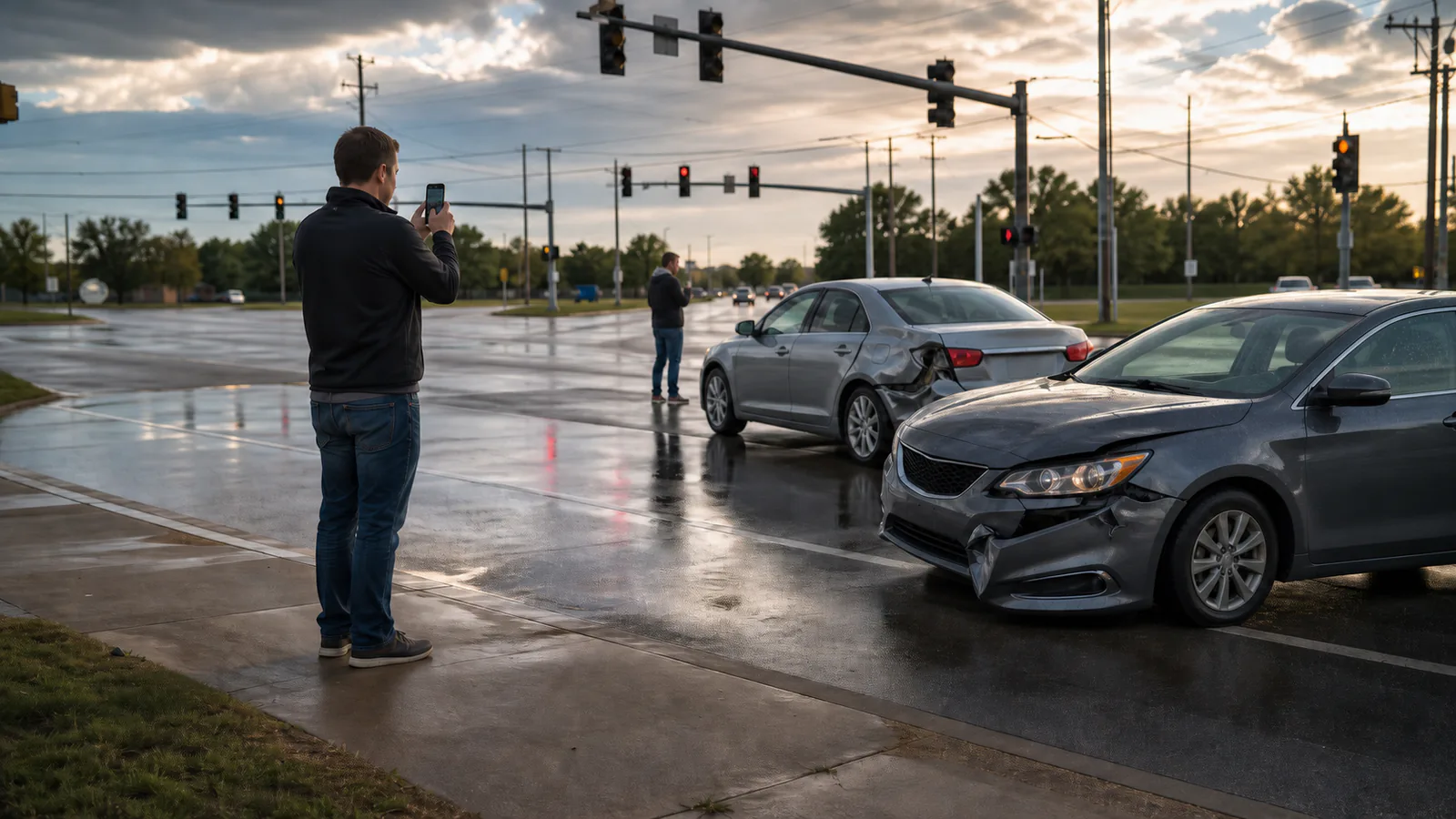
Start with the event, not a percentage. Build separate timelines for each driver or witness, then compare them with photographs, vehicle damage, the collision report, messages, video, location details, and other reliable records. Oklahoma’s comparative-negligence statutes can make each person’s share of negligence important, but a webpage cannot assign that share from a short description.
Keep each person's version intact before deciding where they conflict
Write down what you personally saw, heard, and did before adding another person’s account. Create a separate entry for each driver, passenger, witness, officer, insurer, or later source. Include the date, method, exact source, and whether the statement is complete, summarized, disputed, or still unconfirmed.
Do not merge similar statements into a consensus or fill a gap with the version that feels most likely. A clean comparison makes agreements, contradictions, and unknowns visible without deciding which person is correct.
- Direction and lane of travel for each vehicle
- Signals, signs, markings, visibility, and roadway conditions actually documented
- Where each person says the vehicles first made contact
- What happened immediately before and after contact
- Which details are observations, estimates, or later conclusions
Help after an injury
Ask Jason Hicks about your next step.
When you are hurt, bills and insurance questions can be difficult to deal with on top of everything else. Ask for a conversation about the concern that brought you here.
Jason Hicks is an Oklahoma attorney, practicing since 2008.
Jason Hicks personally reads every message sent through 405. If more information is needed, Jason Hicks follows up himself.
Keep the people and vehicles attached to their sources
Give each vehicle a neutral label and note which report, document, or person places someone in it. Keep that source and date beside the connection. If another source gives a different connection, keep both rather than choosing one to make the file look complete.
Use the optional details below when names or insurance references are difficult to follow. Leave a connection unresolved when no identified source states it. The list helps you follow who said what. It does not decide identity, ownership, agency, employment, or coverage. Nor does it decide fault, causation, percentage, credibility, or collectability.
- Person and stated role, vehicle label, and any owner identified by the source
- Insurer and locally masked policy or claim reference, kept with the document naming it
- Report, communication, or speaker stating the connection, with its date
- Any conflict, changed description, or connection that remains unresolved
The crash report is important. It is not the final verdict.
Match the report number, agency, people, vehicles, location, diagram, narrative, codes, and any listed witnesses with your own records. Note an omission or disagreement specifically: identify the field or statement, the information you believe is accurate, and the record that supports the correction.
A report may contain direct observations, statements from other people, coded entries, and the officer’s interpretation. Those items should not be treated as interchangeable. Keep the complete report and any supplement or correction response together.
The way the vehicles moved tells you which evidence to seek
The label on a wreck helps organize questions but does not decide responsibility. In a rear-end or sudden-stop event, timing, distance, traffic movement, visibility, and the sequence of impacts may matter. At an intersection, signals, approach lanes, turning paths, sight lines, and video sources may matter. In a lane-change or sideswipe event, lane position, mirrors, blind spots, turn signals, and damage alignment may matter.
For a hit-and-run or multi-vehicle event, preserve the order of impacts, vehicle descriptions, witness contacts, camera locations, claim notices, and any later identification information. Keep facts about an unknown driver or an unidentified vehicle clearly labeled as unknown.
In a chain collision, tell the story one impact at a time
Do not summarize a chain collision as one event. Give each vehicle a neutral label and create one row for every claimed contact. Record the time or order if known, the two vehicles or objects involved, the contact areas, movement before and after, the source for that detail, and whether the sequence is agreed, disputed, or unknown.
Then compare that sequence with vehicle photographs, repair and inspection records, scene video, witness accounts, event-data material if lawfully available, and the report diagram. A clean sequence can expose a missing impact or conflicting source without pretending the table itself proves responsibility.
A fictional three-car example shows why the order matters to the factual question. Label the cars A, B and C. Driver B says, “A hit me and pushed me into C.” A witness says, “B hit C before A hit B.” Keep those accounts separate and identify who supplied each one. Both descriptions involve contact between A and B and between B and C, but they describe different sequences. Mark the order disputed; do not rewrite one account to make them agree.
Photographs may show the contact areas without resolving which impact came first. Note where the witness was and what the witness says they actually saw. Then identify any existing video, report detail or other record that could help distinguish the sequences, its source and what remains unavailable or unclear. If no identified source establishes the order, leave it unresolved. This example does not assign fault, decide credibility or show that every suggested record exists or can be obtained.
- Neutral vehicle label and driver or owner
- Impact number or unknown sequence
- Vehicles or objects involved and contact areas
- Movement described before and after each contact
- Source, confidence, disagreement, and missing record
An insurer's position is not the same thing as the underlying facts
Ask for any responsibility or coverage position in writing and identify the claim, policy, person, and evidence the communication addresses. A phone explanation, a preliminary estimate, a coverage letter, and a final legal determination are different things.
If a percentage or conclusion changes, preserve both versions and ask what information changed. Do not edit an older note to match the new position. A dated sequence may show which question is factual, which is insurance-specific, and which still needs individual legal review.
Bring the records that expose the real disagreement
Start with the disagreement you want help understanding and the records you already have. A one-page event summary, a note of who said what, or an identified photograph may help explain it. List missing reports, photographs, or other records as missing rather than guessing.
Use the initial website form's broad choices and safe contact fields to request a conversation. It does not accept the event summary or uploads. Keep reports, photographs, video, policy documents, identification numbers, and other sensitive records for a later appropriate exchange if one is arranged.
What to gather
- A dated first-person account that separates observations from estimates
- Separate accounts identifying each driver, passenger, witness, officer, or insurer as the source
- Optional people-and-vehicle detail list when connections are unclear, retaining sources, dates, masked references, and confirmed, disputed, changed, or unresolved status
- Complete collision report, supplements, diagrams, codes, and correction communications
- Original scene, vehicle, roadway, and damage photographs or video with source notes
- One row for every claimed impact in a multi-vehicle crash
- Vehicle location, inspection, repair, and damage-alignment records
- Written responsibility, coverage, citation, or claim positions and every later revision
Questions that may change the answer
- Which facts are agreed, disputed, missing, or based only on an estimate?
- What did each source personally observe, and what came from someone else?
- Which identified report, document, or speaker states each connection among a person, vehicle, owner, policy reference, and claim reference—and which connection remains unverified?
- Which collision-scenario records could confirm or contradict an account?
- Has an insurer or another person supplied a percentage or conclusion, and what evidence did it identify?
- Are several drivers, owners, employers, businesses, platforms, or unknown vehicles involved?
Common questions
Does the police report decide who was at fault?
Treat the report as an important source, not a complete answer. Compare its observations, statements, diagram, codes, and conclusions with the surrounding records and identify the source of each disputed item.
What if I may have made a mistake too?
Preserve the facts accurately and do not guess at a percentage. Oklahoma comparative-negligence rules can make the allocation important, but the effect depends on the complete evidence, parties, claims, and current law.
What if the insurer changes its fault position?
Keep every version, request the current position in writing, and ask what information changed. A dated record helps a lawyer distinguish a new fact from a new interpretation.
How should I organize a crash involving several vehicles?
Use one row per claimed impact. Identify the vehicles or objects, sequence if known, contact areas, movement, source, and whether each detail is agreed, disputed, or unknown. Compare the rows with photographs, reports, witness accounts, and vehicle records.
Why you can check the answer
See the law and official information behind this page.
These references support the general law, official process, or practical advice described here. They cannot decide how a rule, policy, document, or deadline applies to your particular facts.
By Jason Hicks
- 405 editorial method
405 Injury Law neutral record-organization methodology (internal; not legal authority)
405’s internal method for organizing records, separating observations from inferences, and identifying the next question. It is not legal, medical, or insurance authority.
- Oklahoma law
Oklahoma Statutes Title 23, Sections 13 and 14 (official external source)
The Oklahoma comparative-negligence provisions used to explain why fault percentages can affect recovery without deciding any person’s share of responsibility.
Pinpoint: Sections 13 and 14; Oklahoma Statutes Title 23 PDF page 7
- Official source
Oklahoma Insurance Department how to file a claim (official external source)
Oklahoma Insurance Department claim guidance used for recordkeeping, broad claim categories, claim-disagreement paths, and consumer-assistance orientation.
- Official source
Official Oklahoma Traffic Collision Report Instruction Manual, revision 08-2025 (official external source)
Official manual used only to identify the field and code architecture for the matching 08-2025 report version and to support a source-attributed worksheet; it does not establish truth, fault, admissibility, weight, or legal effect.
Pinpoint: Cover and printed pages 3-12 table of contents; field instructions beginning at printed page 13 through the report fields, codes, narratives, diagrams, people, vehicles, insurance, and citations.
See how 405 checks important legal and official information.